January 13, 2026
Digital Time Tracking in 2026: How to Turn a Requirement into an Advantage
January 2026. You're planning the year, reviewing your prices, calculating the last quarter's figures – and asking yourself: How many hours were actually spent on Project X? Not sure. Was your work for Client Y profitable? Where is all the time going? And how did all those overtime hours in December come about?
In 2026, digital time tracking is not only mandatory, but also your lever for profitable projects and healthy working hours.
What is digital time tracking? The electronic recording of working hours – start, end, breaks, and project assignment – via app, software, or web tool. Unlike Excel lists or timesheets, it is scalable, analyzable, and legally compliant.
In concrete terms, this means: Modern time tracking combines EU/DACH compliance with measurable benefits – better calculation, less scope creep (the creeping expansion of the project scope), fair working hours, and significantly faster invoicing.
What Does the Law Say in 2026?
The legal direction is clear: In 2022 (1 ABR 22/21), the Federal Labor Court clarified that employers in Germany must record the start, end, and overtime of their employees (ArbZG). The basis for this was laid by the ECJ ruling of 2019, which obliges all member states to have objective, reliable systems in place.
Germany: Recording of start and end times and overtime is mandatory.
Austria: Section 26 of the Working Hours Act (AZG) specifically regulates the recording obligation.
Switzerland: In addition to regular recording, SECO also recognizes simplified models (Art. 73 ArGV 1).
The 5 Most Important Advantages for Agencies, IT Teams, Designers, Marketers, Freelancers, and Self-Employed Persons
1) More Accurate Quotes Instead of Gut Feelings
Actual times make quotes and retainers realistic: more precise cost estimates per service (concept, design, dev, QA, construction management, etc.), fewer "we miscalculated" situations, and clearer prices for recurring to-dos and task packages.
2) Detect Scope Creep Early
Time tracking shows when a project is going off track before it escalates. This is particularly valuable for agencies, architecture firms, and freelancers, where change requests are part of everyday life.
3) Capacity Planning with Real Figures
Digital timesheets provide reliable data: utilization per person, actual effort vs. estimate, realistic sprint and milestone planning.
4) Fairness & Health Protection
In creative and IT-heavy environments, overload often creeps up gradually. A time tracking system makes overtime and under-time visible and enables fair compensation—in line with EU requirements for measurable working hours.
5) Faster Billing
For freelancers and teams, this means invoices in minutes and traceable time sheets and working time records.
Use Cases by Target Group
Freelancers & Self-Employed: Clear overview of time invested, faster invoicing, better estimates for future projects.
Agencies: Retainer controlling, margin per customer, employee utilization.
Architectural Firms: HOAI phase transparency, documenting supplements, construction site time tracking.
Law Firms: Hourly billing of clients, case tracking, fee statements.
Consulting: Make project phases transparent, justify daily rates, document additional expenses.
IT/Software Teams: Sprint reality vs. planning, improving forecasts, quantifying tech debt.
Design Teams: Protect focus times, document iteration loops, calculate feedback rounds realistically.
Marketing: Track campaign expenses, optimize content production, evaluate channel performance vs. time investment.
Lean Start: The 4-Week Rule
- Start small: First projects + tasks + break rule
- Self-service: Everyone tracks their own hours
- Data economy: Only record what you really evaluate
- Review after 4 weeks: What's annoying? Simplify it. What's missing? Add it.
Practical tip: Start with a pilot project. The average training and acceptance time in the team is 2–3 weeks.
FAQ: Frequently Asked Questions About Time Tracking in 2026
Is time tracking mandatory in Germany in 2026? Yes. Since the BAG ruling in 2022, employers must record the start, end, and overtime hours. Breaks and rest periods must also be taken into account. A specific law for implementation is expected, but the obligation already applies.
Is digital time tracking compatible with trust-based working hours? Yes. Flexibility is maintained—time tracking provides evidence, not control. The team continues to decide when work is done.
How much does time tracking software cost? From free (with limitations) to around $5–15 per user/month for professional tools. The key factor is what you need: just time tracking, but done properly? Or also project controlling and billing?
Which time tracking is suitable for freelancers, self-employed people, and teams? Lean tools with fast time tracking, easy onboarding, project assignment, and export for invoices are ideal. No overhead, no software training.
What about data protection and GDPR? Time tracking data is personal data. Important: Only record what is necessary, clearly define access rights, and do not misuse data. GDPR-compliant tools store data in the EU.
Conclusion
Digital time tracking in 2026 is one of those rare cases where obligation and benefit coincide. It makes projects more predictable, teams healthier, and billing faster.
And when you look back in January 2027? You may see a year with less frustration and better margins.
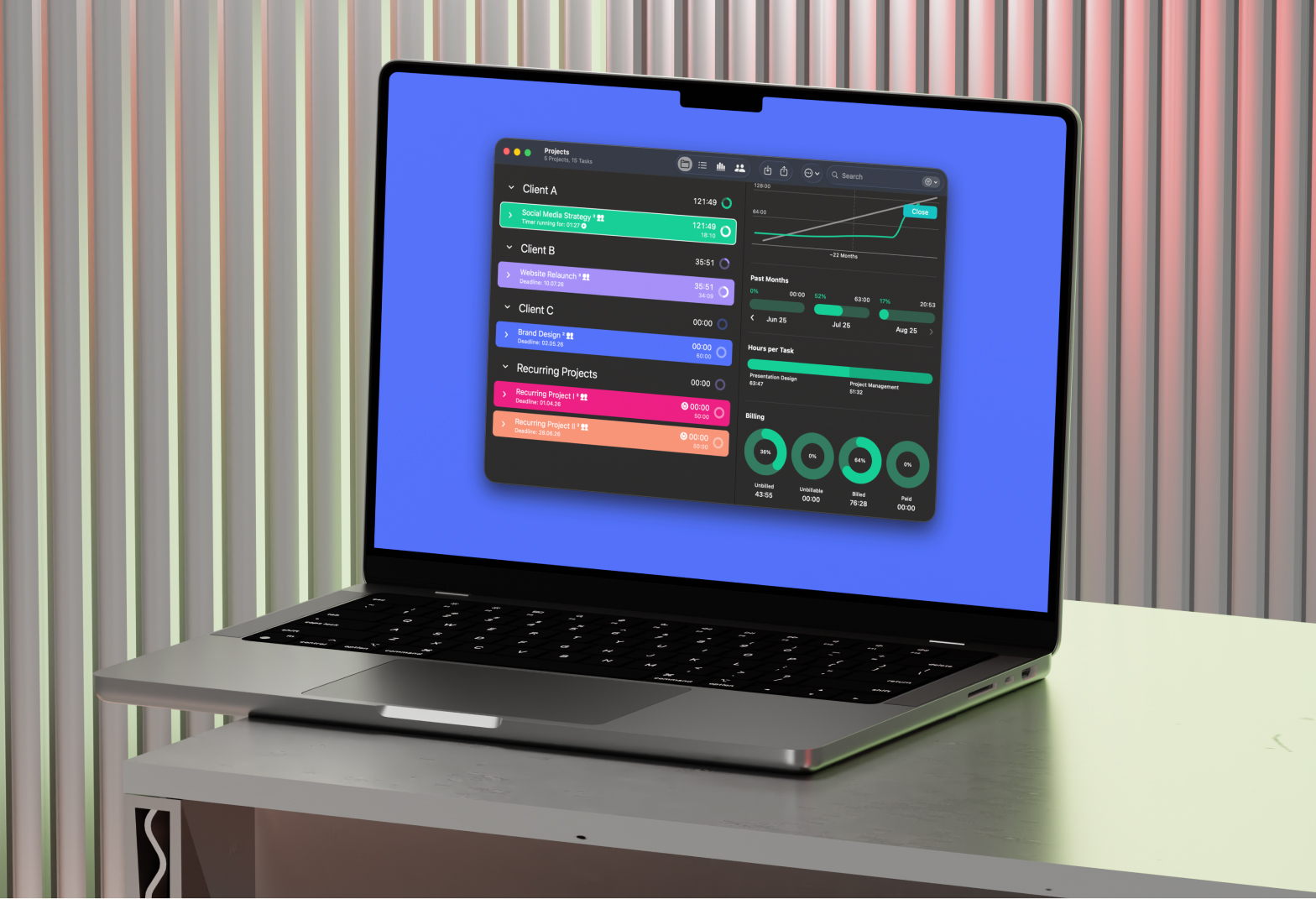
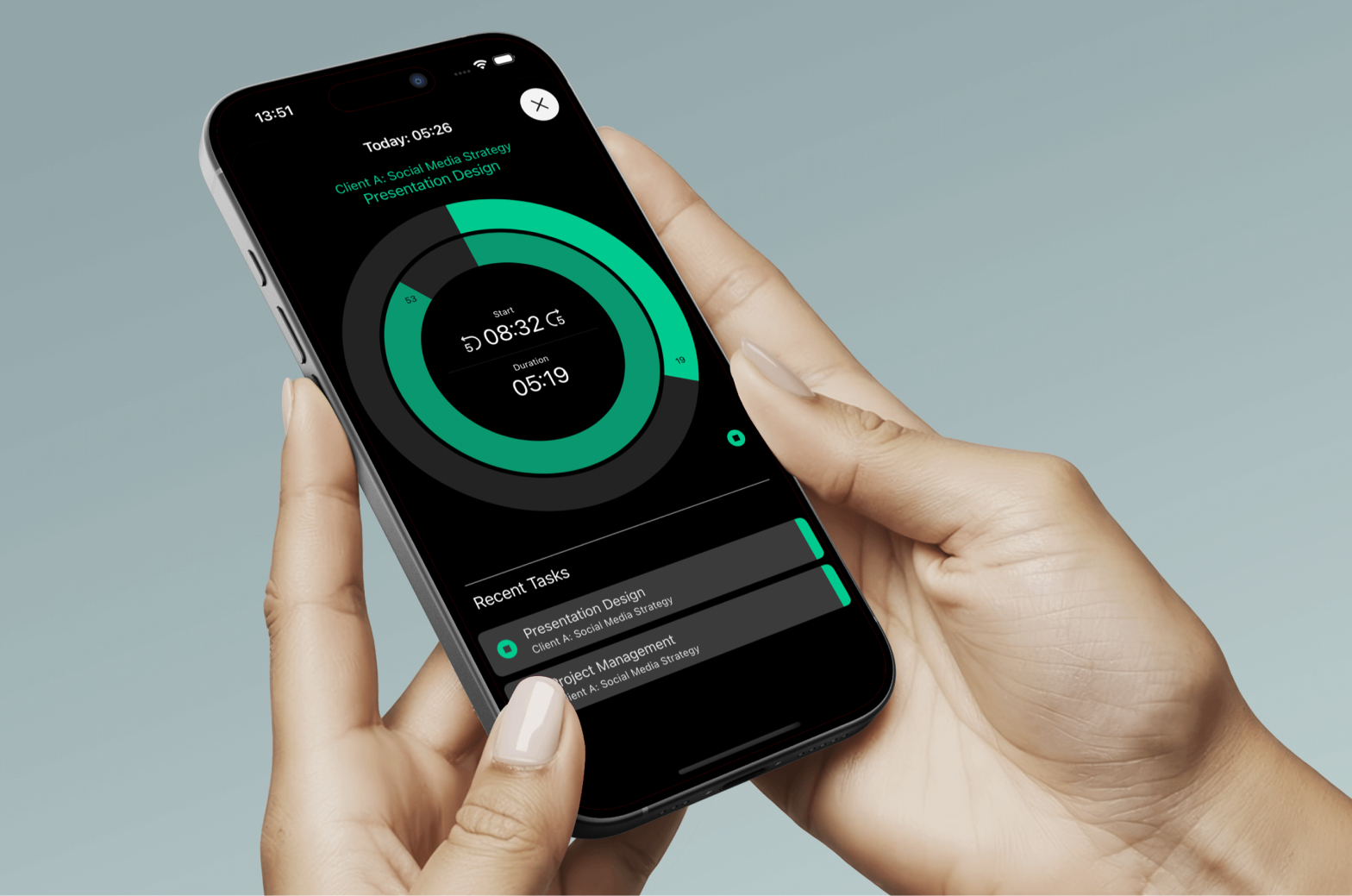
How to Get Started? The Best Way Is with Tyme
"Time tracking can be fun," "Priceless, really..." and "It doesn't get any better than this!" – that's what our users say.
This is not surprising, as we are in constant communication with our users and incorporate customer feedback directly into our feature planning. Our goal: to make time tracking really easy and as pleasant as possible.
What sets Tyme apart:
- Synchronized: On Mac, iPhone, iPad, and Apple Watch
- Flexible: Designed for freelancers, self-employed people, and teams of up to 50 people, with integrations to other tools (Lexoffice, sevdesk, GrandTotal, etc.)
- Clear & attractive: All times, projects, budgets, and analyses at a glance, with a focus on good design
- GDPR & legally compliant: Secure data storage on servers in Germany and in accordance with the ECJ time tracking requirement and German ArbZG
- Direct support: From the development team
- Lean & up-to-date: Does what it's supposed to do – and is constantly being improved
Don't miss our Happy New Year promotion: Until the end of February, there is a 20% discount on annual subscriptions – the perfect time to start with clean time tracking.
